


Toxicity of amalgam fillings
Amalgam fillings, commonly known as metal fillings, contain mercury and other heavy metals in their composition, which is why their use has been restricted or banned in many countries today. Mercury vapors can be released from fillings into the oral cavity and enter the body during chewing and brushing. The amount of released vapor depends on the number, size and location of fillings, chewing habits, and tooth brushing habits.
These mercury vapors are associated with an increased risk of:
– Alzheimer’s or Parkinson’s disease
– multiple sclerosis
– kidney diseases, tumors, gastritis, asthma
– digestive system diseases: colitis, Crohn’s disease
– concentration and learning difficulties
– depression, chronic fatigue and anxiety
Research proving the potential toxicity of amalgam
There are numerous studies investigating the potential effects of dental amalgams. Research has shown that mercury can be released from amalgam fillings, and in some individuals mercury levels in the body have been measured at significantly elevated levels. Studies have also examined possible associations between mercury exposure and various health conditions, including effects on the cardiovascular system, rheumatoid arthritis, muscle pain and fatigue.
The U.S. Food and Drug Administration (FDA) has issued information regarding the use of dental amalgam, particularly emphasizing considerations for children, pregnant women and individuals with certain health conditions. Health authorities in several countries have also issued recommendations regarding the careful selection of restorative materials and limiting amalgam use in specific patient groups.
Amalgam fillings and aesthetics
Besides concerns regarding their appearance, amalgam fillings are also aesthetically unfavorable. They can cause discoloration of the gums (the so-called “amalgam tattoo”) and dark shadows within the tooth structure due to the metal showing through.
For these reasons, modern dentistry has largely replaced amalgam fillings with new, aesthetic “white” composite materials that allow restorations to blend naturally with the tooth, making it almost impossible to notice that the tooth has been treated.
Amalgam or “white” composite filling?
Unfortunately, amalgam fillings are still widely used in some countries, primarily because of their lower cost. However, when choosing between amalgam and aesthetic composite fillings, patients should consider the long-term value of investing in a higher-quality, more aesthetic restorative material that provides a more natural appearance and preserves the beauty of their smile.
AT DENTAL ESTETIC STUDIO, WE HAVE BEEN EDUCATING PATIENTS FOR YEARS ABOUT THE IMPORTANCE OF REPLACING AMALGAM FILLINGS AND WE PAY SPECIAL ATTENTION TO SAFE REMOVAL TECHNIQUES!
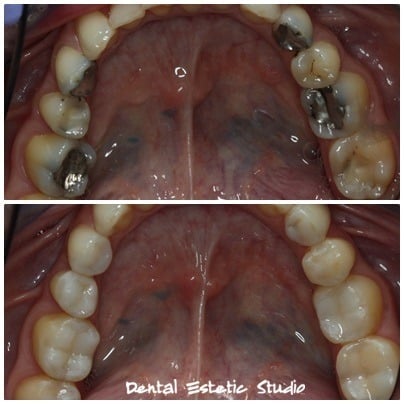
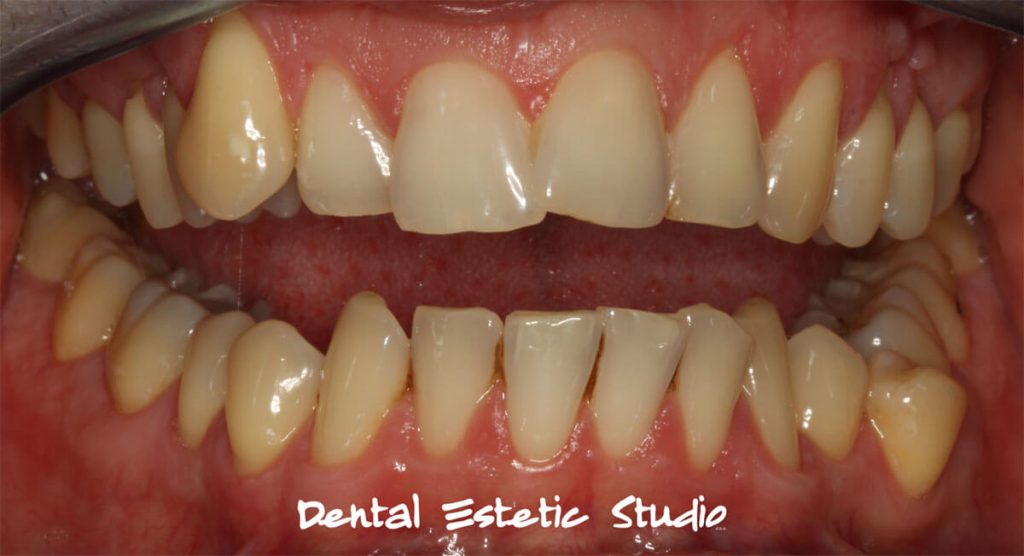
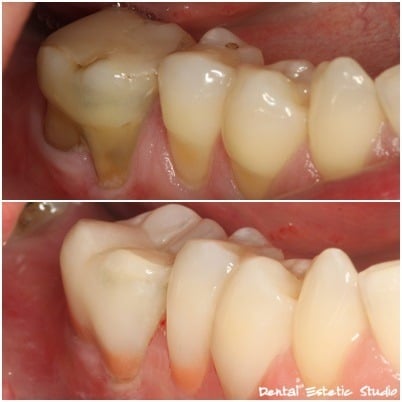
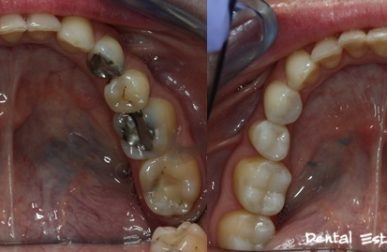
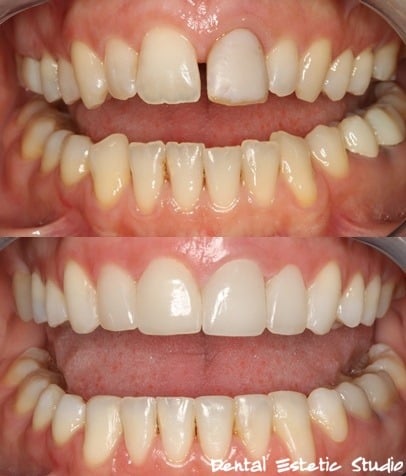
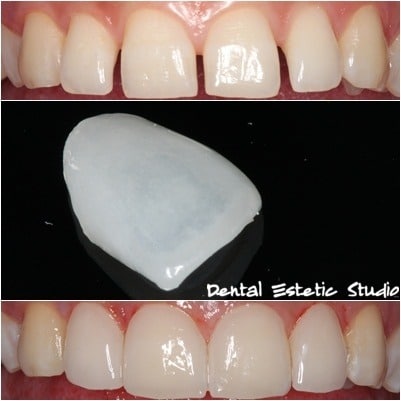
Replaced amalgam fillings with aesthetic composite restorations and restored proper anatomical form of the repaired teeth
BLOG POSTS YOU MIGHT BE INTERESTED IN














REQUEST ADDITIONAL INFORMATION, CONSULT WITH US OR REQUEST AN OFFER
AND
WE WILL GET BACK TO YOU AS SOON AS POSSIBLE
Call us at +385 1 4847 432 or send us a message via the inquiry form.
DEŽMANOVA 5, ZAGREB, CROATIA
info@ordinacijaknego.hr